Select Difficulty Level
Beginner
Fundamentals & Concepts
Intermediate
Scenarios & Logic
Advanced
Strategy & Coding
Complete Interview Drill
50 Real-World Interview Questions (Mixed Difficulty)
Master QA Testing Through Hands-On Practice
The QA Practice Lab is Ram Technical Help's flagship learning environment — a browser-based simulator where software testers can go beyond reading theory and actually practice the skills that determine success in interviews and on the job. Every exercise is modelled on real-world QA tasks: writing test cases for live scenarios, identifying defects in buggy application screenshots, writing SQL validation queries, and answering timed interview questions under exam-like conditions.
📝 Test Case Writing Practice
Writing clear, comprehensive test cases is the foundation of manual QA. The lab presents real scenarios — login forms, search functionality, payment gateways — and challenges you to identify all edge cases, boundary values, and error conditions before seeing the model answer.
🔍 Bug Identification Exercises
Experienced testers know that finding bugs requires pattern recognition developed through practice. Our Bug Sandbox presents UI screenshots, API responses, and log files containing deliberately planted defects. Practice raising detailed, reproducible bug reports following JIRA/Bugzilla standards.
⚡ Timed Interview Drills
The Rapid Fire mode simulates interview pressure with 60-second response windows. This trains both your technical recall and your ability to communicate concisely under stress — the two skills interviewers most frequently cite as differentiators between shortlisted candidates.
🗄 SQL Validation Queries
Data integrity testing requires the ability to write SQL queries that verify application behaviour at the database layer. Practice SELECT with multiple JOINs, subqueries, GROUP BY, and aggregate functions using realistic test data — the exact skill tested in SDET and QA Lead interviews.
Build Your XP Streak
Every question you answer earns XP points. The Daily Challenge mode awards 2x XP and tracks your consecutive-day streak. Research consistently shows that 20–30 minutes of deliberate daily practice, maintained for 90 days, is sufficient to transform a complete beginner into a job-ready QA professional. Start your streak today.
📺 Recommended Video Tutorials
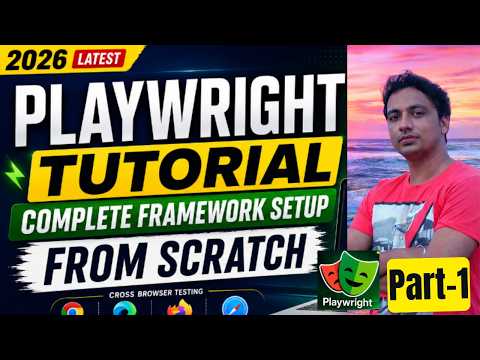
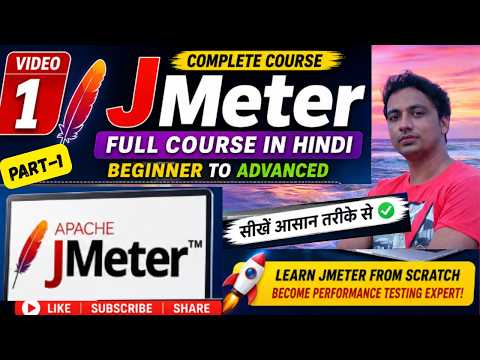
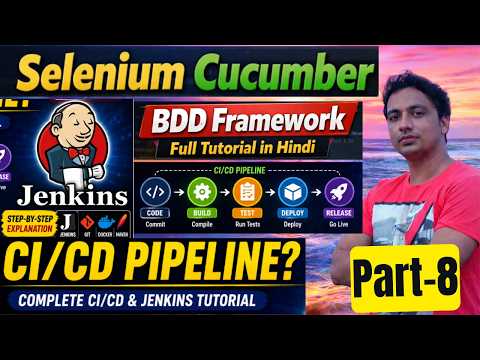
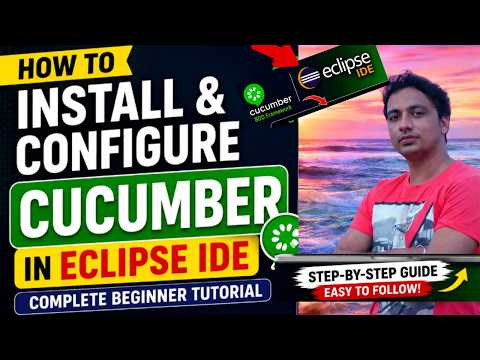
Watch free practical QA & test automation tutorials from Smart QA Hub


Master Practice Testing Sandbox & SDET Problem Solving Guide
Enhance your test automation problem-solving capabilities by practicing complex web UI scenarios, dynamic locators, shadow DOM traversal, network mocking, and API validation.
1. Dynamic Locators & Shadow Roots
Practice targeting elements inside shadow DOM trees, handling dynamic IDs generated by React/Angular frameworks, and crafting resilient XPath and CSS Selectors.
2. Asynchronous Timing & Wait Strategies
Master dynamic polling conditions using FluentWait and ExpectedConditions. Eliminate flaky tests caused by network latency or animated DOM transitions.
3. End-to-End Test Suite Integration
Combine UI interaction testing with backend API status code checks and database state verification to achieve full 360-degree test coverage.
Real-World Case Studies
Learn how to tackle complex testing challenges that you will face in actual production environments.
Scenario 1: The "Ghost Cart" Race Condition
Problem: In a high-traffic E-commerce application, users reported that items added to their cart were occasionally disappearing during checkout. Standard manual testing failed to reproduce the issue.
The Discovery: Through rigorous Concurrency Testing and API log analysis, the QA team identified a race condition. When a user double-clicked the "Add to Cart" button, two parallel requests were sent. If the second request completed before the first, it would overwrite the session state with stale data.
Scenario 2: The "Timezone Trap" in Global Scheduling
Problem: A logistics platform showed incorrect delivery times for users in Australia, while working perfectly for users in Europe and the USA.
The Discovery: The application was storing dates in local server time instead of UTC. When the Australian frontend (UTC+11) requested data, the calculation logic failed to account for the date-flip occurring across the International Date Line.
Testing Practice FAQs
Everything you need to know about preparing for your QA career.
How do I start my career in Manual Testing?
Start by understanding the Software Testing Life Cycle (STLC). Focus on learning how to write effective test cases, identify bugs, and understand the difference between severity and priority. Our Manual Testing module covers these fundamentals in depth.
Which programming language is best for Automation?
While Python and JavaScript are rising, Java remains the industry standard for Selenium automation due to its robust ecosystem and enterprise support. We recommend mastering Core Java concepts (OOPS, Collections) before diving into Selenium.
What is the role of API testing in modern QA?
Most modern apps are built on microservices. API testing allows you to verify the business logic without the slow and brittle UI layer. Mastering tools like RestAssured and Postman is now a mandatory skill for senior QA roles.
Is SQL knowledge required for software testers?
Absolutely. Data integrity is the backbone of any application. Testers often need to verify that data entered in the frontend is correctly transformed and stored in the backend database using SQL queries.
How can AI help in software testing?
AI tools can assist in generating test data, writing boiler-plate automation code, and even predicting potential bug hotspots. However, human intuition and critical thinking remain irreplaceable for exploratory testing.
What are the most common interview questions for Selenium?
Interviews typically focus on locator strategies, handling dynamic elements, wait synchronization (Implicit vs Explicit), and framework architecture (POM, Data-Driven). Practice these in our Automation module.
Why Trust Ram Technical Help?
With over a decade of experience in enterprise automation and manual testing, Ram Technical Help was founded to provide no-nonsense, technically accurate, and career-focused learning material. Our content is manually vetted, updated monthly to reflect 2026 industry standards, and designed to help you not just pass interviews, but excel in your daily QA tasks.